

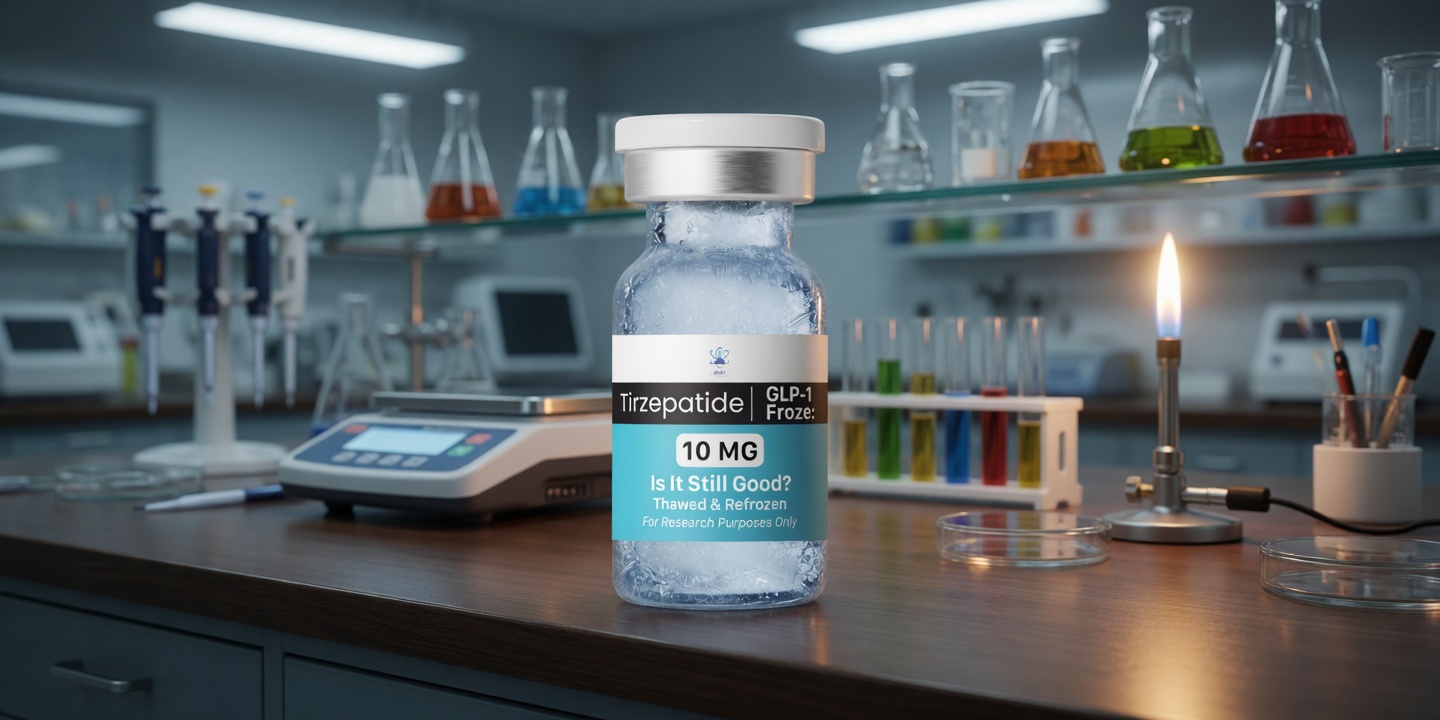

Questions about frozen Semaglutide and Tirzepatide come up constantly usually after an accident, like leaving a pen in the car or discovering it wedged against the freezer coils. Since FDA-approved GLP-1 medications require refrigeration (not freezing), that mistake raises a very expensive question: is the pen still usable?
Is it dangerous? Can it be salvaged after thawing? Here’s what manufacturers, scientists, and the data actually say including what happens when Ozempic, Wegovy, or Zepbound cross their temperature limits.
Is it dangerous to inject a frozen or thawed pen?
The short answer: not in the way you might fear. A frozen GLP-1 pen isn’t toxic. Injecting thawed medication won’t poison you or trigger sudden dangerous side effects.
The real problem is effectiveness. A pen that’s been frozen may no longer deliver the drug properly meaning your blood sugar may not improve, or your weight loss progress could stall, even while side effects like nausea continue. You bear the risk without the benefit.
That distinction matters more for some patients than others. For people managing blood sugar, degraded medication poses immediate clinical risk. For those using GLP-1s primarily for weight loss, the consequence is slower progress and wasted money.
One critical caveat: you can’t detect the damage visually. Thawed GLP-1 medication looks identical to intact medication. There’s no discoloration, cloudiness, or other visible sign that it’s been compromised which makes the situation uniquely frustrating.