


Disclosure: We earn a commission on purchases made through links in this article. Our recommendations reflect published research and product formulation, not commission rates.
Managing fatigue on GLP-1 therapy starts with deciding which kind you have, because ordinary adaptation and a medical problem feel similar and call for opposite responses. Adaptation fatigue tracks the dose schedule and eases on its own. Fatigue that climbs steadily, arrives without a dose change, or comes with other symptoms needs investigation rather than patience. Our guide to energy during GLP-1 therapy covers the nutritional causes and the habits that address them.
What Ordinary Adaptation Looks Like
Adaptation fatigue follows the dose and resolves without intervention. Three features identify it.
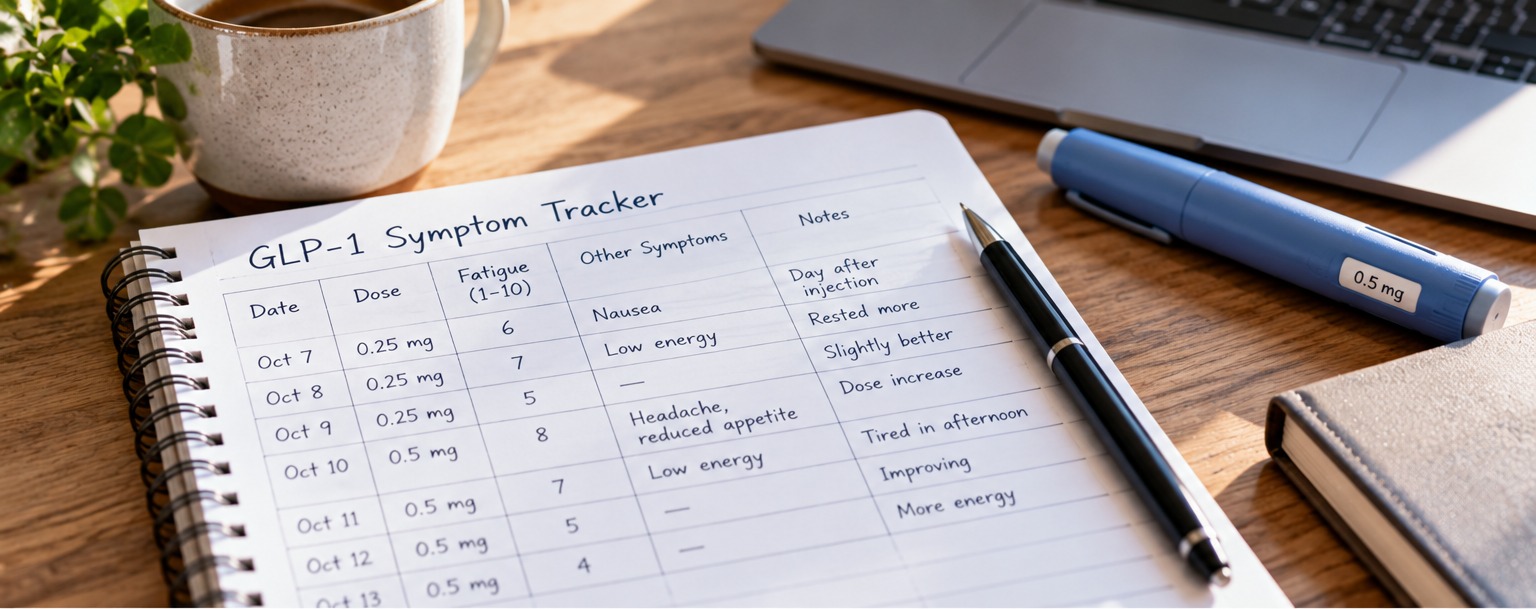
Timing tracks the schedule. Fatigue appears in the days after an injection or a dose increase, then eases. Severity stays moderate. Daily activity continues, though with less margin than usual. Direction improves. Each week at a steady dose feels better than the last.
Most people describe the heaviest stretch across the first eight to twelve weeks of escalation, settling once intake stabilizes at the maintenance dose.
When Fatigue Is Not the Medication
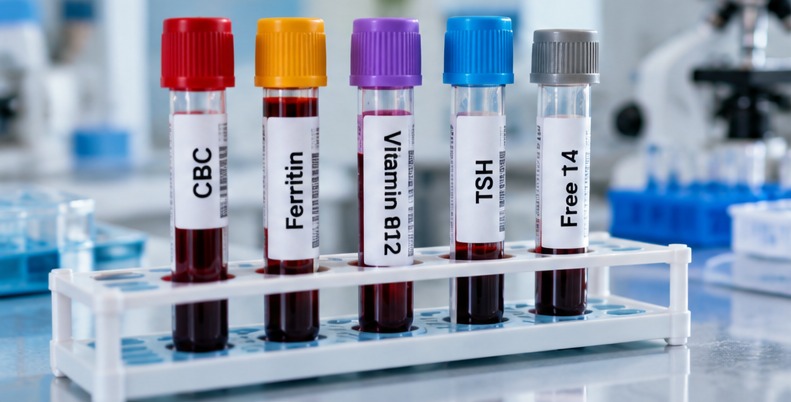
Several conditions produce fatigue that gets attributed to GLP-1 therapy because the timing overlaps. Each has its own treatment, and none responds to waiting.
- Iron deficiency anemia. Reduced food volume lowers iron intake, and depletion develops gradually over months.
- B12 deficiency. Also a volume problem, and common enough to warrant checking.
- Thyroid dysfunction. Produces fatigue, cold intolerance, and weight changes independently of any medication.
- Sleep apnea. Often present before weight loss begins and frequently undiagnosed. Daytime exhaustion is the main symptom.
- Dehydration. Thirst signals blunt alongside hunger, and the result shows up as fatigue rather than thirst.
- Persistent low mood. Fatigue, flat motivation, and loss of interest belong to a clinical picture that deserves attention in its own right.
A blood panel covering ferritin, B12, thyroid function, and a metabolic panel resolves most of this list.
Signs That Warrant Prompt Attention
Certain symptoms alongside fatigue call for contacting a clinician without waiting for the next appointment.
Severe abdominal pain, particularly pain radiating to the back. Vomiting that prevents keeping fluids down. Chest pain, shortness of breath, or a racing heartbeat. Fainting or near-fainting. Fatigue severe enough to interfere with driving or working safely.
Pancreatitis and gallbladder complications are uncommon with GLP-1 therapy and documented. Prompt assessment matters more than certainty about the cause.
Describing It to Your Prescriber

Specific description produces a useful response where a general one produces reassurance. Four details carry the conversation.
- Timing against the dose. Which days relative to injection, and whether a dose increase preceded the change.
- Severity in functional terms. What you have stopped doing, rather than a rating out of ten.
- Direction. Improving week over week, holding steady, or worsening.
- Accompanying symptoms. Dizziness, breathlessness, palpitations, cold intolerance, low mood.
Bring a two-week record rather than a recollection. Tracking method sits in our guide to energy on Ozempic.
Dose Adjustment as a Response
Prescribers adjust titration pace, hold a dose, or step down when fatigue runs high, and raising it is a normal part of treatment rather than a failure.
Slowing escalation extends the timeline and reduces the intensity of each transition. Holding at the current dose gives intake time to catch up. Neither decision ends the therapy.
Never adjust a dose independently. The change belongs with the prescriber.
Where Supplementation Fits
Supplementation plays a supporting role alongside nutrition and clinical assessment rather than substituting for either. Which categories relate to energy sits in our guide to energy supplements during GLP-1 therapy.
RightWell GLP-1 Boost is stimulant-free, which matters during a phase when hydration and blood sugar already run unsteady. The formula supports appetite control, metabolic balance, and steady blood sugar, combining Eriomin lemon bioflavonoid complex, Morosil red orange extract, and CaloriBurn GP grains of paradise. The product is non-GMO, gluten-free, and made in the USA, priced from $29 to $64 per bottle with a 60-day money-back guarantee.
View GLP-1 Boost pricing and options
Frequently Asked Questions
How long is too long for fatigue on GLP-1 therapy?
Fatigue persisting beyond four weeks at a steady dose, or worsening rather than easing, warrants a clinical conversation.
Does fatigue mean the dose is too high?
Sometimes, and sometimes intake has simply not caught up. A prescriber distinguishes between the two.
Should you stop the medication because of fatigue?
Raise it with the prescriber rather than stopping. Dose adjustment resolves most cases without ending treatment.
Can fatigue appear after months at a stable dose?
Yes, and late-onset fatigue points away from adaptation. Nutrient depletion develops gradually and is worth checking.
These statements have not been evaluated by the Food and Drug Administration. This product is not intended to diagnose, treat, cure, or prevent any disease. Contact your healthcare provider about any symptom experienced during prescription treatment.