


Disclosure: We earn a commission on purchases made through links in this article. Our recommendations reflect published research and product formulation, not commission rates.
Most supplements sold for energy during GLP-1 therapy are stimulants, and stimulants do not address why energy drops on GLP-1 therapy. The causes are nutritional, covered in our guide to energy during GLP-1 therapy. What this covers is the supplement categories themselves: which relate to energy production, which deserve attention when food volume drops, and which exist because they sell.
Categories That Relate to Energy
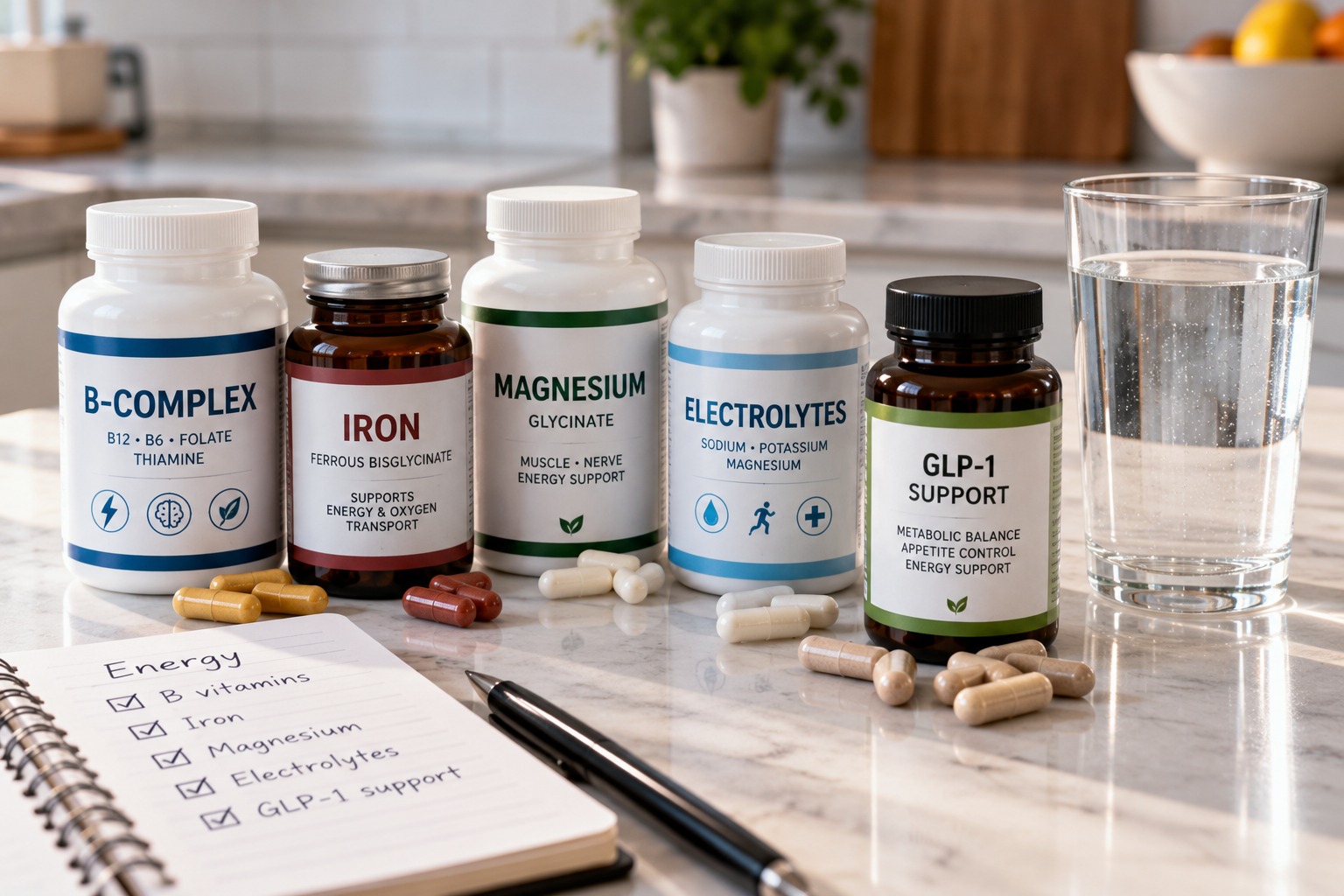
Four nutrient groups have a defined role in energy metabolism, and all four arrive in smaller quantities when total food volume falls.
- B vitamins. B12, B6, folate, and thiamine function as cofactors in converting food into usable energy. Intake tracks food volume directly.
- Iron. Carries oxygen to tissue. Deficiency presents as fatigue, and menstruating women face higher baseline risk.
- Magnesium. Involved in hundreds of enzymatic reactions including energy production. Commonly low even on ordinary intake.
- Electrolytes. Sodium and potassium govern fluid balance and nerve function. Both drop alongside reduced food and fluid.
Smaller food volume is the common thread. Each of these becomes harder to obtain when total intake falls by half.
Why Blood Work Comes First
Supplementing for a deficiency you do not have produces no benefit, and iron specifically carries risk when taken without need. Excess iron accumulates rather than clearing.
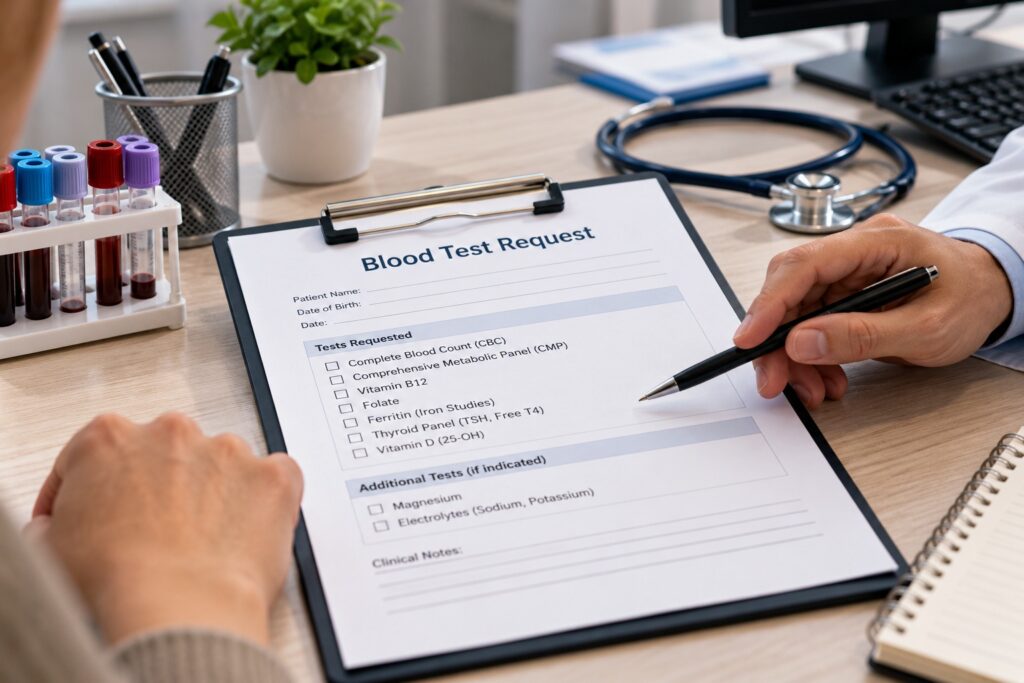
Ask the prescriber for a panel covering B12, ferritin, and a metabolic panel before adding anything. Fatigue during GLP-1 therapy also has causes that no supplement addresses, including thyroid dysfunction and anemia from other sources.
A result gives you a target. Without one, supplementation is guessing with money attached.
What Stimulants Do Instead
Caffeine blocks adenosine receptors, which masks the sensation of tiredness without changing anything producing it. The underlying shortfall persists and the effect expires.
Three specific problems during GLP-1 therapy. Caffeine acts as a mild diuretic during a phase when fluid intake is already reduced. Stimulants sharpen the blood sugar swings behind afternoon crashes. Added appetite suppression layers on top of the medication’s own, pushing intake lower when the shortfall is already the issue.
Guarana, yerba mate, green tea extract, and synephrine all belong in this category regardless of how the label frames them.
Categories Without Support
Several ingredients appear in energy formulas with no meaningful evidence behind their inclusion at the doses used.
Proprietary adaptogen blends list impressive-sounding botanicals at undisclosed amounts. Oxygen and alkaline products operate on claims unsupported by physiology. Detox and cleanse formulas address a problem the liver and kidneys already handle. Mega-dose B-complex products deliver quantities far beyond what the body uses, with the excess excreted.
More is not better with water-soluble vitamins. The surplus leaves in urine.
Where a Metabolic Formula Fits
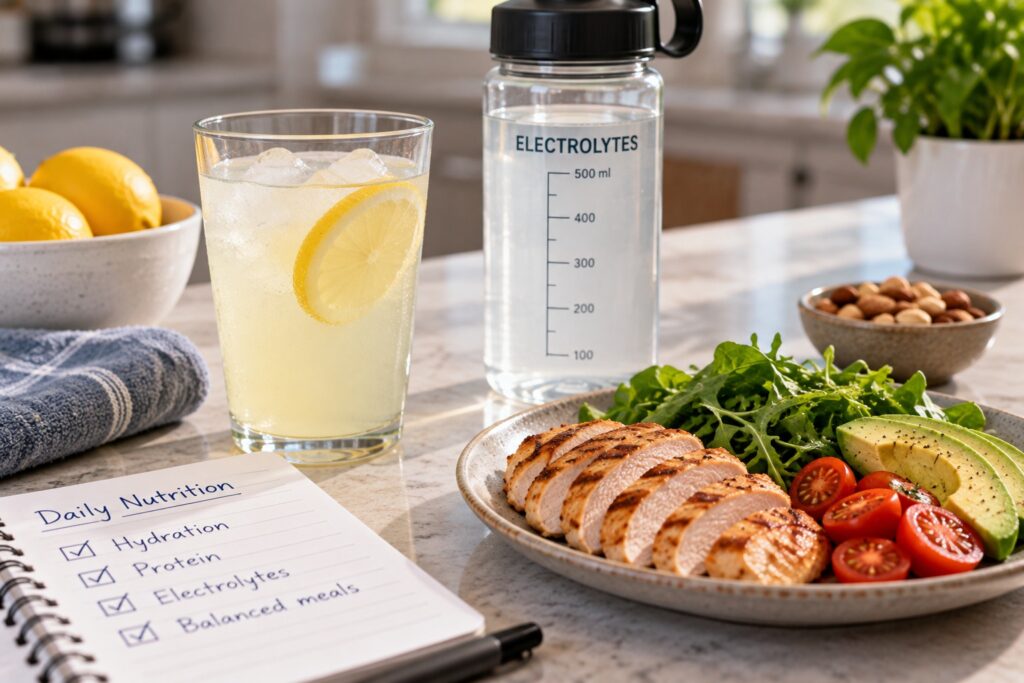
A stimulant-free metabolic formula supports blood sugar stability without adding caffeine to a dehydrated system. That is a different job from correcting a nutrient deficiency, and it does not replace blood work or food.
RightWell GLP-1 Boost is stimulant-free by design, which separates it from most of the energy category. The formula supports appetite control, metabolic balance, and steady blood sugar, combining Eriomin lemon bioflavonoid complex, Morosil red orange extract, and CaloriBurn GP grains of paradise. The product is non-GMO, gluten-free, additive-free, and made in the USA, priced from $29 to $64 per bottle with a 60-day money-back guarantee.
Evaluating any supplement on its label sits in our supplement buying guide.
View GLP-1 Boost pricing and options
Frequently Asked Questions
Should everyone on GLP-1 therapy take a multivitamin?
Reduced food volume makes a case for one, though a blood panel identifies what is actually needed. Discuss it with the prescriber.
Can supplements interact with semaglutide?
Slowed gastric emptying affects absorption of some substances. Review any addition with the prescribing clinician.
Do electrolyte drinks help during GLP-1 therapy?
They address a genuine shortfall during escalation. Choose low-sugar versions, since the sugar content in many products is substantial.
How long before a nutrient supplement affects energy?
Correcting a genuine deficiency takes weeks to months depending on the nutrient. Iron repletion is among the slowest.
These statements have not been evaluated by the Food and Drug Administration. This product is not intended to diagnose, treat, cure, or prevent any disease. Discuss supplementation with your healthcare provider, particularly alongside prescription medication.