


Disclosure: We earn a commission on purchases made through links in this article. Our recommendations reflect published research and product formulation, not commission rates.
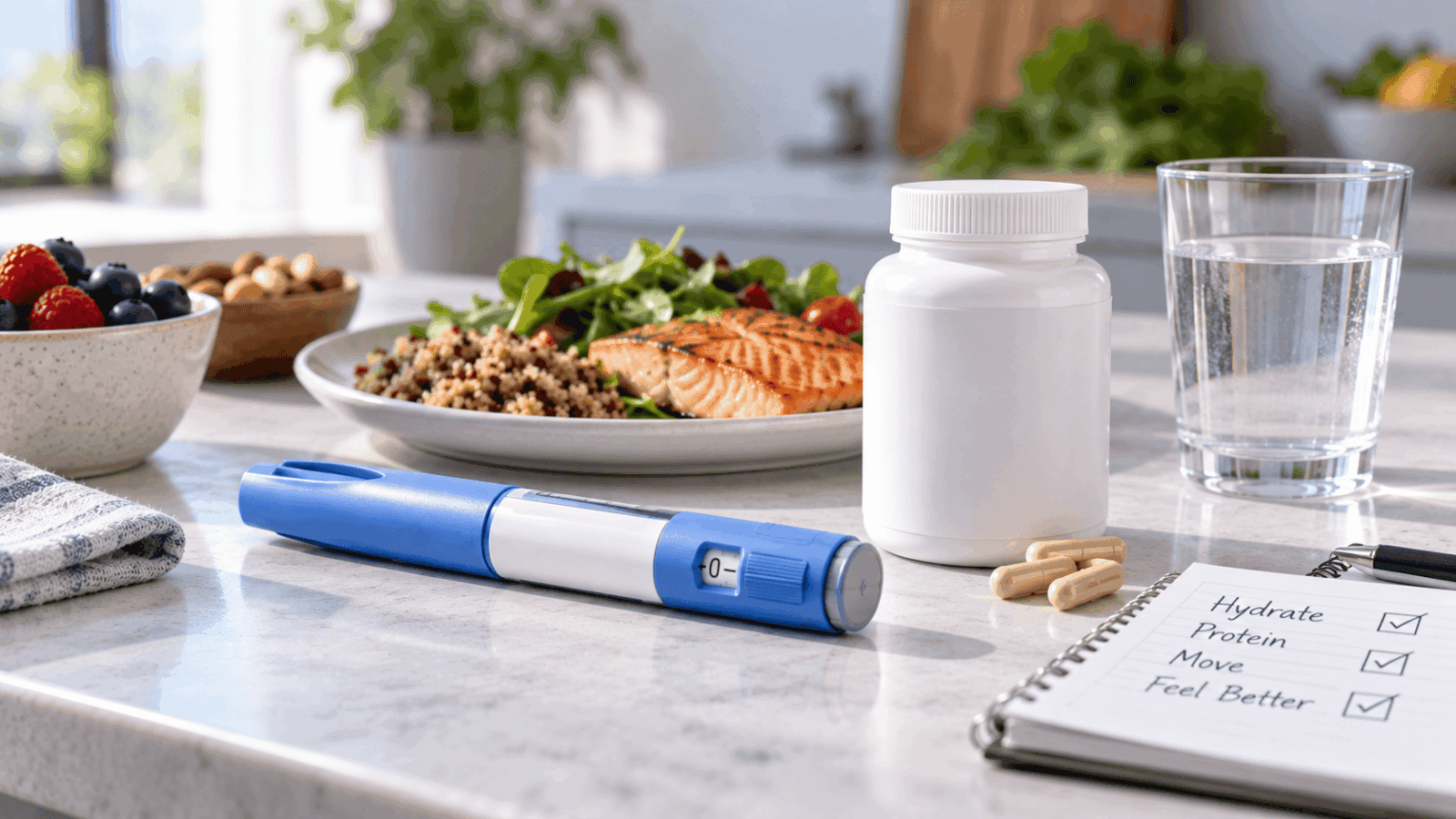
Low energy during GLP-1 therapy usually traces back to what you stopped eating, not to the medication itself. Semaglutide reduces appetite sharply, and calorie intake often drops faster than nutrition habits adapt. Protein falls short. Fluid intake drops alongside food volume. Electrolytes follow. Stimulant energy products mask that pattern for a few hours without correcting any part of it. Restoring steady energy on GLP-1 therapy starts with nutrition and hydration, supported by a stimulant-free formula built for blood sugar balance.
Why Energy Drops on Ozempic and Other GLP-1 Medications
Fatigue appears among the reported adverse reactions in semaglutide clinical trials, though the underlying causes are largely nutritional. GLP-1 medications slow gastric emptying and suppress appetite, which is the intended mechanism. For a full explanation of how that mechanism works, see our guide to GLP-1 medications versus supplements.
Five factors drive the energy drop:
- Calorie intake falls too fast. Appetite suppression outpaces meal planning, leaving daily intake well below what sustains normal activity.
- Protein falls short. Smaller meals mean less protein, and lean muscle loss follows within weeks.
- Dehydration sets in. Fluid intake tracks food intake, and nausea reduces both.
- Electrolytes deplete. Sodium, potassium, and magnesium drop alongside reduced food volume.
- Micronutrients thin out. Iron and B vitamins arrive in smaller quantities when total food volume shrinks.
Fatigue peaks during dose escalation for most people, generally across the first 8 to 12 weeks, then eases as intake stabilizes.
Why Stimulant Energy Products Backfire on GLP-1 Therapy
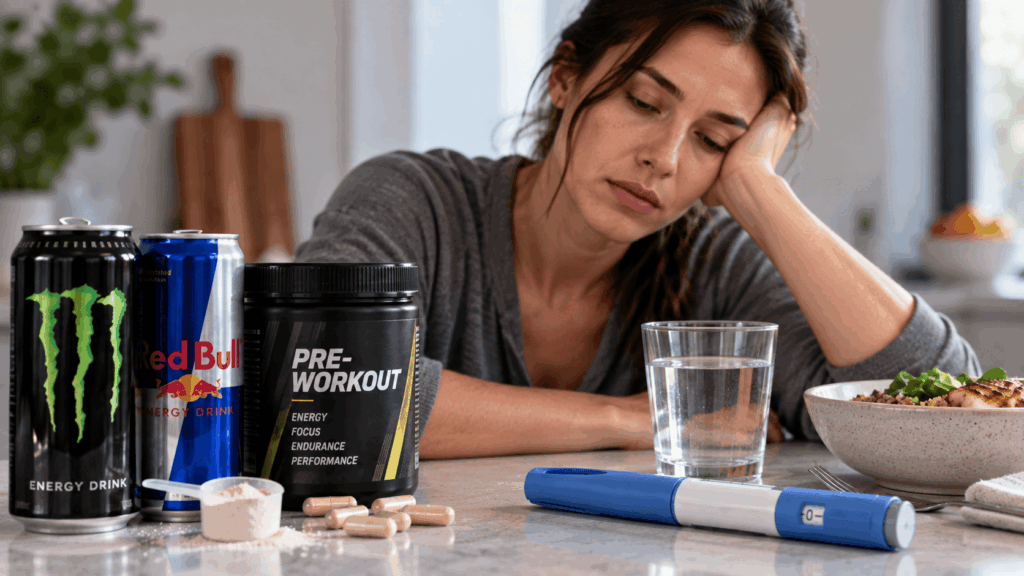
Caffeine-based energy products deliver a short stimulant response without addressing calorie, protein, or hydration shortfalls. Energy drinks, thermogenic fat burners, and high-caffeine pre-workouts all share the same limitation.
Three problems stack up. Caffeine acts as a mild diuretic, which compounds dehydration already present. Stimulants sharpen the blood sugar swings that contribute to afternoon crashes. Appetite suppression from stimulants layers on top of appetite suppression from the medication, pushing intake lower rather than correcting the shortfall.
Stimulants create the sensation of energy. Nutrition creates energy.
Five Habits That Restore Energy on GLP-1 Therapy
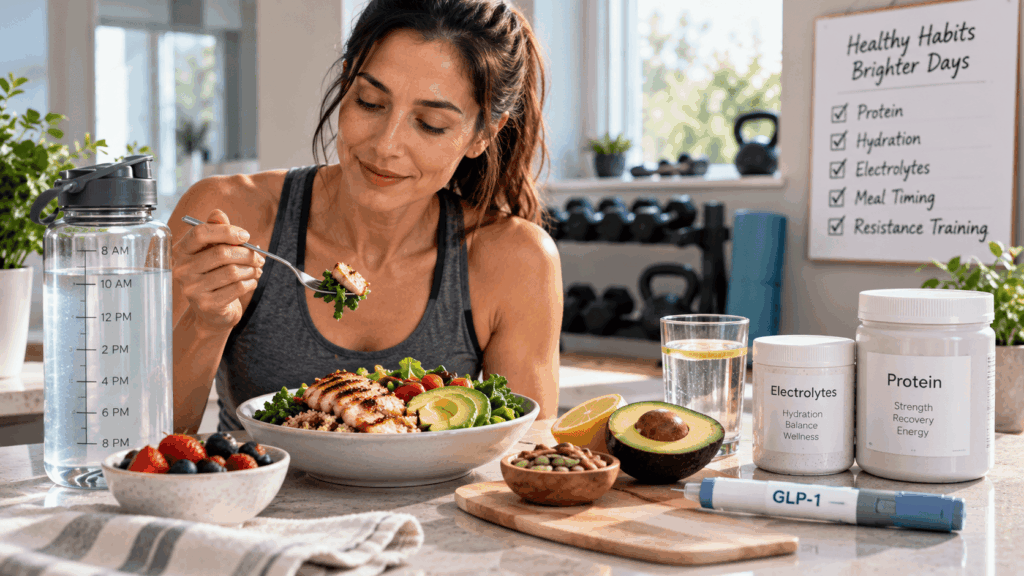
Consistent energy on GLP-1 medication comes from protein, hydration, electrolytes, meal timing, and resistance training. Each habit addresses a specific cause from the list above.
- Prioritize protein at every meal. Aim for 1.2 to 1.6 grams per kilogram of body weight daily, spread across meals rather than concentrated in one.
- Drink before you feel thirsty. Thirst signals blunt alongside hunger signals. Set a fixed daily target rather than waiting for the cue.
- Replace electrolytes. Add a sodium, potassium, and magnesium source, particularly during dose escalation.
- Eat on a schedule. Appetite suppression removes the reminder to eat. A fixed meal schedule keeps intake steady when hunger no longer prompts it.
- Train with resistance twice weekly. Preserved muscle mass protects both energy capacity and metabolic rate through the weight loss phase.
Where a Stimulant-Free Supplement Fits
A stimulant-free metabolic formula supports steady energy and blood sugar balance without adding caffeine to an already dehydrated system. RightWell GLP-1 Boost was formulated for that lane specifically.
The formula is stimulant-free by design, which separates it from the caffeine-driven products that dominate the energy category. Eriomin lemon bioflavonoid complex was evaluated in a 12-week human study for its role in GLP-1 activity and glucose metabolism. Morosil red orange extract has been studied for body composition and waist circumference. CaloriBurn GP grains of paradise has been studied for brown adipose tissue activation.
GLP-1 Boost supports appetite control, metabolic balance, and steady blood sugar across every stage of a GLP-1 journey, whether you are preparing to start therapy, currently on medication, or transitioning off. The formula is non-GMO, gluten-free, and made in the USA, priced from $29 to $64 per bottle with a 60-day money-back guarantee.
View GLP-1 Boost pricing and options
Ozempic Energy Options Compared
| Approach | What it addresses | Limitation |
| Caffeine energy products | Short-term alertness | Compounds dehydration, no nutritional correction |
| Protein and hydration habits | The actual cause | Requires consistency and planning |
| Electrolyte supplementation | Mineral depletion | Addresses one factor only |
| Stimulant-free metabolic support | Blood sugar balance, steady energy | Works alongside nutrition, not instead of it |
Frequently Asked Questions
How long does fatigue last on Ozempic?
Fatigue typically concentrates in the first 8 to 12 weeks during dose escalation, then eases as food intake and hydration stabilize. Persistent fatigue beyond that window warrants a conversation with your prescriber.
Can you drink coffee on a GLP-1 medication?
Moderate coffee intake is generally fine. Relying on caffeine to compensate for low calorie or protein intake leaves the underlying cause unaddressed.
What should you eat for energy on semaglutide?
Protein-forward meals with adequate fluid and electrolytes. Greek yogurt, eggs, fish, lean meat, and legumes deliver protein in small volumes, which matters when appetite is suppressed.
Is a stimulant-free supplement better during GLP-1 therapy?
Stimulant-free formulas avoid the dehydration and blood sugar swings that caffeine adds to an already reduced intake. GLP-1 Boost supports metabolic balance without stimulants.
These statements have not been evaluated by the Food and Drug Administration. This product is not intended to diagnose, treat, cure, or prevent any disease. Consult your healthcare provider about fatigue or any symptom experienced during prescription treatment.