


Disclosure: We earn a commission on purchases made through links in this article. Our recommendations reflect published research and product formulation, not commission rates.
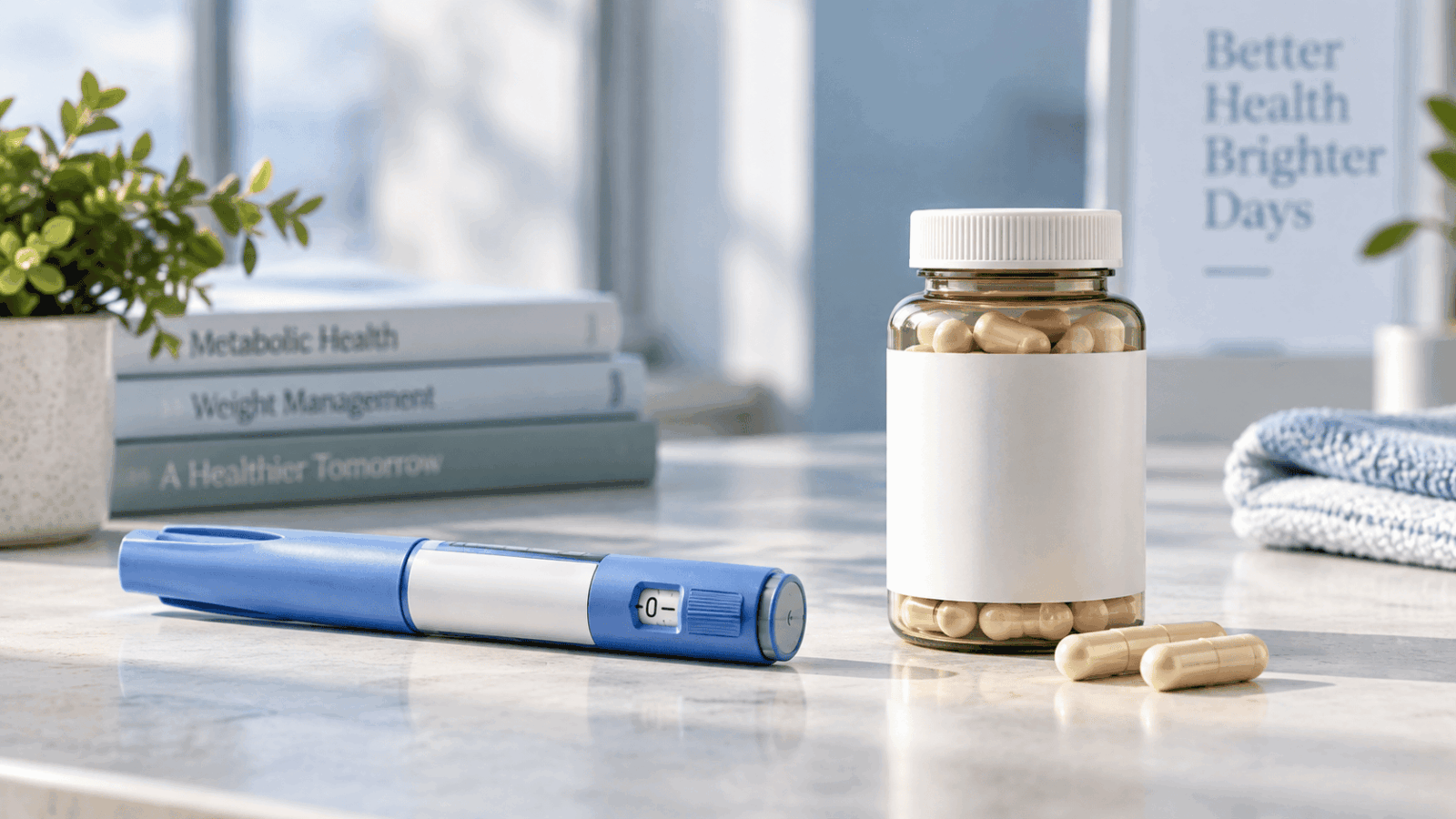
GLP-1 medications and GLP-1 supplements target the same hormone through entirely different mechanisms. Prescription medications bind directly to GLP-1 receptors and activate them at concentrations the body never produces on its own. Supplements deliver nutrients studied for their role in supporting the body’s natural GLP-1 signaling. Choosing between them depends on your BMI, your budget, your tolerance for side effects, and where you sit in your weight-management journey.
What GLP-1 Does in the Body
GLP-1 (glucagon-like peptide-1) is a hormone released by intestinal L-cells within minutes of eating. The hormone performs three jobs: triggers insulin release from the pancreas, slows how quickly food leaves the stomach, and sends a fullness signal to the brain.
That triple action explains why GLP-1 sits at the center of modern weight management. Levels rise after meals and fall between them. In people carrying excess weight or managing type 2 diabetes, the post-meal rise is often blunted, so the fullness signal arrives late or too weakly to change eating behavior. Prescription medications and GLP-1 supplements both address that gap, through different routes.
How Prescription GLP-1 Medications Work
Prescription GLP-1 receptor agonists bind directly to GLP-1 receptors and activate them at concentrations far above natural levels. Semaglutide (Ozempic, Wegovy) and tirzepatide (Zepbound) dominate the category in 2026.
Trial results are substantial. Semaglutide studies report average weight loss near 15% of body weight. The SURMOUNT-1 trial of tirzepatide reported an average of 22.5% over 72 weeks.
Trade-offs come with those results. Nausea, vomiting, and constipation affect a meaningful share of users during the first 8 to 12 weeks of dose escalation. Pancreatitis and gallbladder complications are rarer but documented. Monthly cost without insurance runs $900 to $1,300. Weight regain after stopping is common when no nutritional structure remains in place.
How GLP-1 Supplements Work
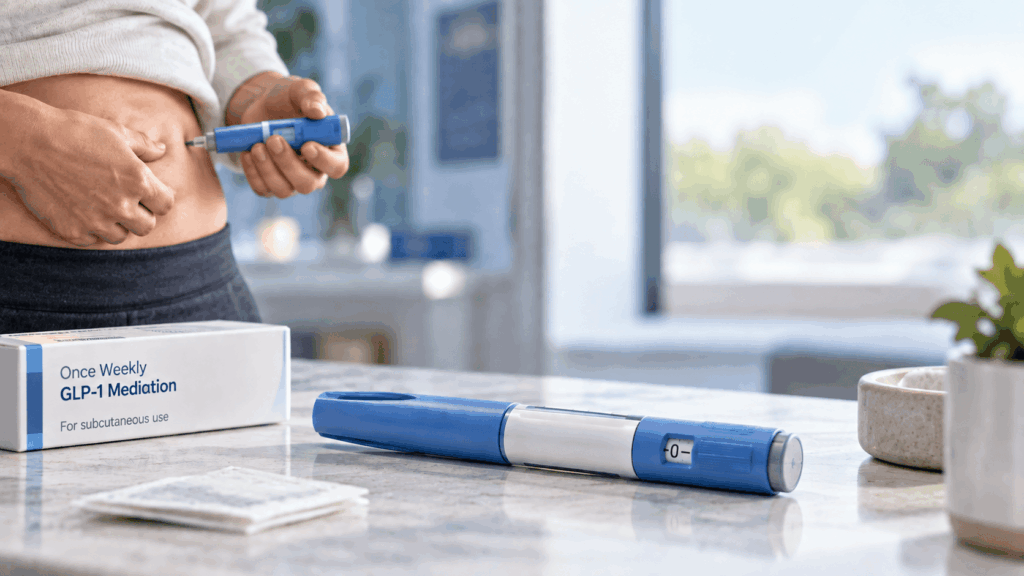
GLP-1 supplements do not bind GLP-1 receptors. Products in this category deliver plant compounds and nutrients studied for their role in supporting the body’s own GLP-1 signaling, appetite regulation, and metabolic balance.
The ceiling matters. L-cells produce a finite amount of GLP-1 regardless of nutritional support, so a supplement does not replicate the appetite suppression reported with injectables. What a well-formulated supplement supports is the underlying metabolic environment: appetite consistency, blood sugar balance, and fat metabolism.
Side effects in this category tend toward mild. Bloating and minor digestive changes are the most common reports.
GLP-1 Medications vs Supplements at a Glance
| Factor | Prescription GLP-1 | GLP-1 Supplement |
| Mechanism | Direct receptor agonist | Supports natural GLP-1 signaling |
| Average weight loss | 15% to 22% of body weight | Varies, supports consistency |
| Monthly cost | $900 to $1,300 before insurance | $29 to $64 per bottle |
| Prescription needed | Yes | No |
| Common side effects | Nausea, vomiting, constipation | Mild bloating |
| Medical supervision | Required | Not required |
| Long-term data | Extensive | Emerging |
Who Each Option Fits

Prescription GLP-1 therapy fits adults with a BMI of 30 or higher, or 27 or higher alongside a weight-related condition such as type 2 diabetes or hypertension. Clinical guidelines set those thresholds, though readiness for weekly injections, cost, and existing digestive conditions all shape the decision.
GLP-1 supplements fit four situations:
- Adults preparing to begin GLP-1 therapy
- Adults currently on a GLP-1 medication who want additional metabolic support
- Adults transitioning off GLP-1 therapy and working to protect their results
- Adults who do not meet prescription criteria and prefer a non-prescription approach
The transition period deserves particular attention. Appetite signals return once medication signaling decreases. Cravings return with them. Maintaining a calorie deficit becomes harder once hormonal suppression stops doing part of the work. Support at that stage determines whether results hold.
What to Look for in a GLP-1 Supplement
A quality GLP-1 supplement lists clinically studied ingredients at disclosed doses, avoids proprietary blends, and meets cGMP manufacturing standards. Three checkpoints separate formulated products from marketing:
Ingredient evidence. Branded compounds with published human research beat generic extracts.
Dose transparency. The label states milligrams per ingredient rather than lumping them into a blend.
Manufacturing standards. Supplements receive no FDA pre-approval, so cGMP certification carries weight.
RightWell GLP-1 Boost meets all three. The formula combines Eriomin lemon bioflavonoid complex, evaluated in a 12-week human study for its role in GLP-1 activity and glucose metabolism, Morosil red orange extract, studied for body composition and waist circumference, and CaloriBurn GP grains of paradise, studied for brown adipose tissue activation. The formula is stimulant-free, non-GMO, gluten-free, and made in the USA. Pricing runs $29 to $64 per bottle depending on plan, backed by a 60-day money-back guarantee.
View GLP-1 Boost pricing and options
Frequently Asked Questions
Can you take a GLP-1 supplement alongside a GLP-1 medication?
Many people do. The supplement supports natural signaling rather than binding receptors, so no direct interaction mechanism exists. Check with your prescribing physician before adding anything to a prescription regimen.
Are GLP-1 pills available without a prescription?
GLP-1 receptor agonist medications remain prescription-only in the United States. Supplements formulated to support natural GLP-1 signaling are available over the counter.
How long before a GLP-1 supplement shows results?
Nutritional interventions work gradually. Most people need 8 to 16 weeks of consistent use alongside healthy eating and movement before evaluating.
Does a GLP-1 supplement replace diet and exercise?
No. GLP-1 Boost supports a weight-management routine rather than replacing nutrition, movement, sleep, or medical guidance.
These statements have not been evaluated by the Food and Drug Administration. This product is not intended to diagnose, treat, cure, or prevent any disease. Consult your healthcare provider before starting any supplement, particularly alongside prescription medication.