


Disclosure: We earn a commission on purchases made through links in this article. Our recommendations reflect published research and product formulation, not commission rates.
Meal planning on a GLP-1 medication means building smaller plates that still deliver full nutrition, because appetite suppression removes the margin for error. Every bite carries more weight when total volume drops by half. Planning ahead replaces the hunger cue that used to prompt eating, and structure prevents the nutritional gaps that produce fatigue and muscle loss during treatment.
Why Planning Matters More on GLP-1 Medication
Appetite suppression removes the signal that previously told you when and how much to eat. Meals get skipped without a plan, and skipped meals compound into deficits in protein, fiber, and micronutrients.
Three changes drive the need for structure:
- Portion capacity drops. What fits comfortably is roughly half a previous serving.
- Hunger stops prompting. Meal times need scheduling rather than waiting for a cue.
- Nutrient density becomes the priority. Lower volume means every food choice carries more nutritional responsibility.
How to Build a GLP-1 Plate
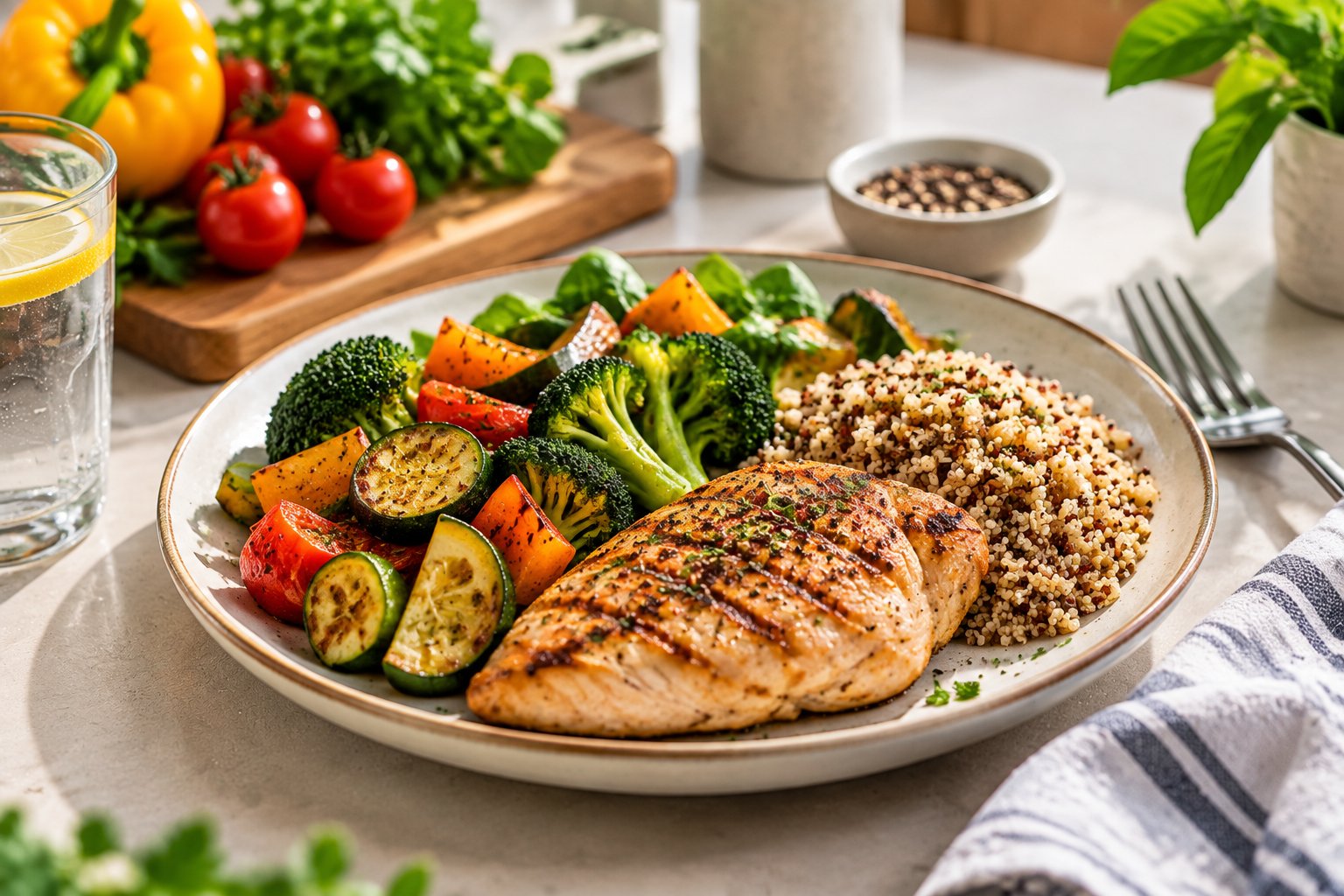
A GLP-1 plate leads with protein, adds vegetables and fiber, then fills remaining space with carbohydrates and fat. Order of eating matters as much as composition, since fullness arrives before the plate empties.
Build each meal in this sequence:
- Protein first. Roughly a palm-sized portion. Eat it before anything else on the plate.
- Vegetables second. Cooked vegetables sit better than raw for most people during treatment.
- Complex carbohydrates third. A small portion of rice, potato, quinoa, or whole grain.
- Healthy fat last, in small amounts. Fat slows digestion further, so keep it modest.
Protein targets for muscle retention are covered in our guide to semaglutide and muscle loss.
Meal Timing Without Hunger Cues
Scheduled meals replace appetite as the trigger to eat during GLP-1 therapy. Three smaller meals with one or two planned snacks works for most people.
Set fixed times and treat them as appointments. Eating something small at each slot matters more than eating the full planned portion. Waiting for hunger during appetite suppression leads to a single large evening meal, which produces the worst digestive discomfort and the largest nutritional gap.
Batch Preparation That Fits Smaller Portions
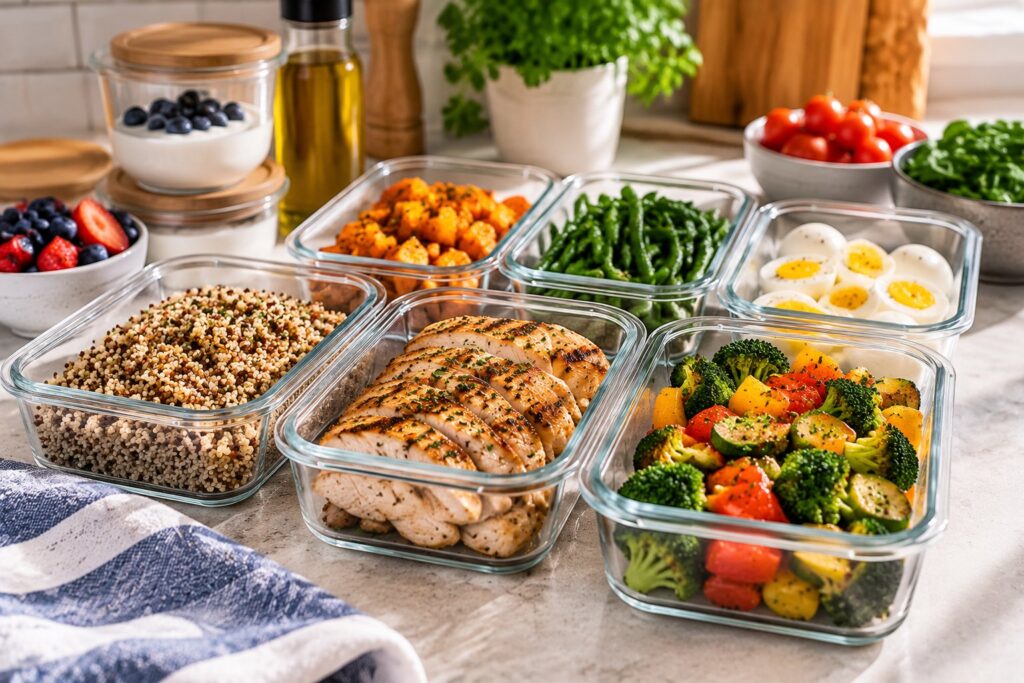
Batch cooking on GLP-1 medication means preparing components rather than full meals, because portion needs change from day to day. A full pre-portioned meal often goes half-eaten.
Prepare these separately and combine as needed:
- Cooked protein: grilled chicken, baked fish, hard-boiled eggs, browned lean beef
- Cooked grains: rice, quinoa, farro
- Roasted or steamed vegetables
- Portioned Greek yogurt or cottage cheese
Store in single-serving containers sized to what you actually finish now, not what you used to eat.
Shopping for a Reduced Appetite
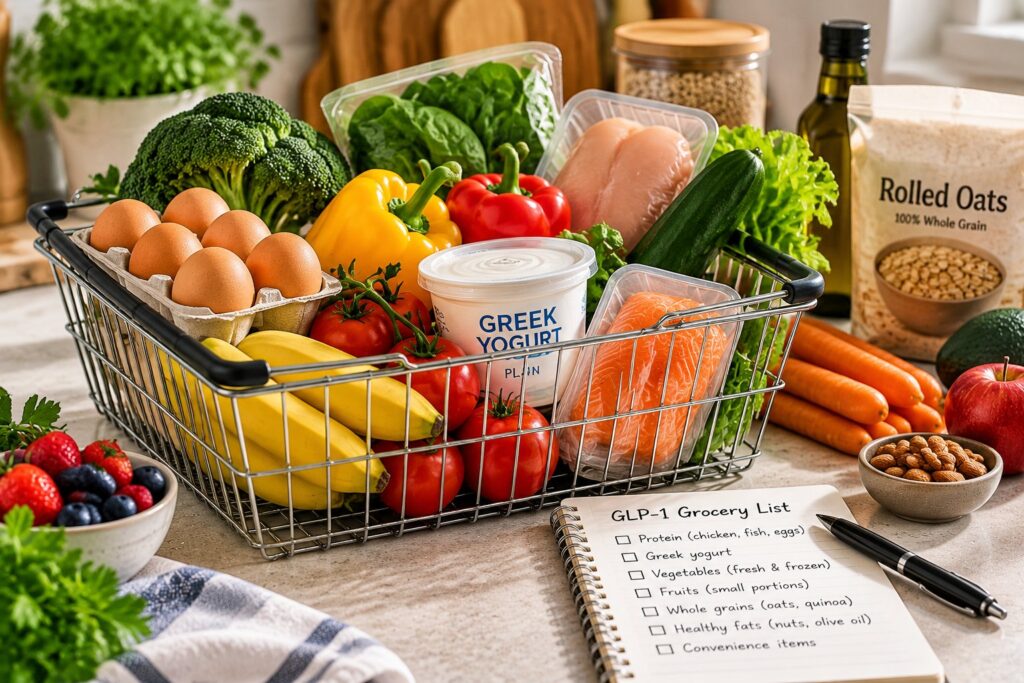
A GLP-1 shopping list prioritizes nutrient density, easy preparation, and small-portion convenience. Buying the same volume as before leads to waste and discourages the habit.
Stock these categories:
Protein. Chicken breast, fish, eggs, Greek yogurt, cottage cheese, lentils, tofu, protein powder for meals that fall short.
Produce. Vegetables that cook quickly and freeze well, plus fruit in smaller quantities than usual.
Carbohydrates. Oats, quinoa, sweet potato, whole grain bread.
Convenience items. Pre-cooked proteins and frozen vegetables for days when preparation feels like too much.
Buy smaller quantities more often. Appetite varies week to week during dose escalation.
Eating Out on GLP-1 Medication
Restaurant portions exceed what fits comfortably, so order with the smaller capacity in mind rather than working around a full plate. Appetizers, starter portions, and sharing a main course all solve the same problem.
Ask for a container at the start of the meal and portion half away before eating. Grilled and roasted preparations sit better than fried. Skip carbonated drinks, which add volume to a stomach that empties slowly. Our guide to improving digestion on semaglutide covers the symptom side in detail.
Where Metabolic Support Fits Into a Plan
Consistent meal structure does the work, and supplementation supports it rather than substituting for it.
RightWell GLP-1 Boost is a stimulant-free formula supporting appetite control, metabolic balance, and blood sugar stability across every stage of a GLP-1 journey, including the period after therapy ends when appetite returns and meal structure carries the results.
Eriomin lemon bioflavonoid complex, Morosil red orange extract, and CaloriBurn GP grains of paradise make up the active formula. The product is non-GMO, gluten-free, and made in the USA, priced from $29 to $64 per bottle with a 60-day money-back guarantee.
View GLP-1 Boost pricing and options
Frequently Asked Questions
How many meals a day should you eat on GLP-1 medication?
Three smaller meals with one or two planned snacks suits most people. Fixed timing matters more than the exact number.
What if you cannot finish a meal on semaglutide?
Stop eating and save the rest. Pushing past fullness is the most common cause of nausea during treatment.
Should you count calories on a GLP-1 medication?
Protein and nutrient density matter more than calorie counting, since appetite suppression already produces the deficit.
Can you meal prep a full week on GLP-1?
Prepare components rather than assembled meals. Portion needs shift through dose escalation, and flexible components waste less.
These statements have not been evaluated by the Food and Drug Administration. This product is not intended to diagnose, treat, cure, or prevent any disease. Consult your healthcare provider about nutrition during prescription treatment.