



Disclosure: We earn a commission on purchases made through links in this article. Our recommendations reflect published research and product formulation, not commission rates.
Eligibility for a GLP-1 prescription rests on three things: BMI thresholds, medical history that rules the medication out, and insurance coverage that often decides access regardless of clinical qualification. Many people meet the clinical criteria and still cannot get the medication because coverage denies it. Understanding all three before the consultation saves considerable time.
BMI Thresholds
Approved weight-management criteria set a BMI of 30 or higher, or 27 or higher alongside a weight-related health condition. The second threshold is where most borderline cases fall.
Conditions that qualify someone at the lower threshold include type 2 diabetes, high blood pressure, high cholesterol, obstructive sleep apnea, and cardiovascular disease. Prescribers assess the full picture rather than the number alone.
BMI has known limitations as a measure, particularly for muscular individuals and across different body compositions. Prescribers weigh it alongside waist circumference, metabolic markers, and history.
Medical History That Rules It Out
Several conditions make GLP-1 therapy inappropriate regardless of BMI.
Absolute contraindications on approved labeling include a personal or family history of medullary thyroid carcinoma, and Multiple Endocrine Neoplasia syndrome type 2. Pregnancy and breastfeeding also rule the medication out.
Conditions requiring careful evaluation rather than automatic exclusion:
- History of pancreatitis, which raises the risk profile
- Gallbladder disease, given documented complications
- Severe gastrointestinal conditions such as gastroparesis, since the medication slows gastric emptying further
- History of diabetic retinopathy, which can worsen with rapid glucose change
- Active eating disorder history, which changes the clinical picture substantially
Disclose the full history at consultation. Omissions here create risk rather than access.
How Insurance Decides

Coverage, not clinical eligibility, is what blocks most people who qualify. Plans differ widely, and weight-management indications face tighter restrictions than diabetes indications.
Four factors determine the outcome:
- Whether the plan covers weight-management medication at all. Many exclude the category outright.
- Prior authorization requirements. Most plans require documentation before approving.
- Step therapy rules. Some plans require documented failure of other approaches first.
- Documented attempt history. Plans often want evidence of supervised weight-management efforts.
Call the number on the insurance card and ask specifically whether the plan covers GLP-1 medication for weight management, and what prior authorization requires. Prescriber offices handle the submission, though the documentation comes from the patient.
The Eligibility Consultation
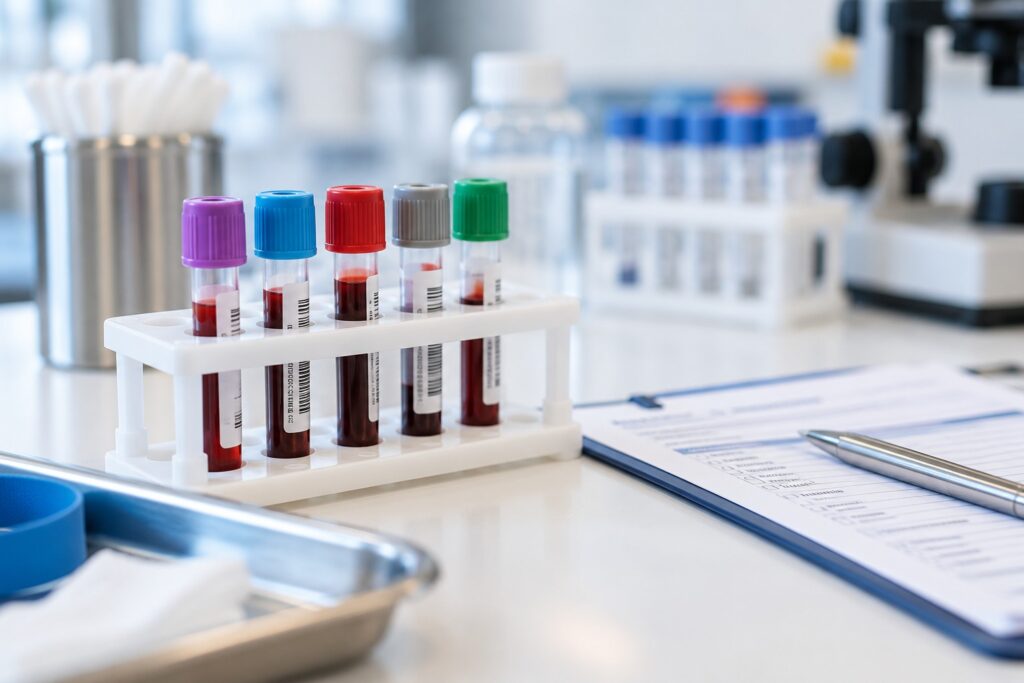
Expect a full medical history review, physical measurements, and bloodwork. Prescribers assess suitability rather than simply writing the prescription.
Bring a list of current medications and supplements, your family medical history particularly around thyroid cancer and endocrine conditions, a record of previous weight-management attempts, and your insurance details.
Bloodwork commonly covers A1C, a metabolic panel, thyroid function, and lipids. Results shape both the eligibility decision and the starting approach.
When Eligibility Falls Short
People who do not meet criteria, or whose coverage denies the medication, still have options. Denial on coverage grounds can be appealed, and prescriber offices handle appeals routinely.
Non-prescription approaches sit outside this framework entirely. A supplement is not a substitute for prescription treatment, and anyone who meets clinical criteria should pursue that route with a physician.
RightWell GLP-1 Boost is a stimulant-free supplement supporting appetite control, metabolic balance, and blood sugar stability. The formula combines Eriomin lemon bioflavonoid complex, Morosil red orange extract, and CaloriBurn GP grains of paradise. The product is non-GMO, gluten-free, and made in the USA, priced from $29 to $64 per bottle with a 60-day money-back guarantee.
Our comparison of GLP-1 medications and supplements covers where each approach fits.
View GLP-1 Boost pricing and options
Frequently Asked Questions
Can you get a GLP-1 prescription without a weight-related condition?
Yes, at a BMI of 30 or higher. The additional condition requirement applies only at the lower threshold of 27.
What happens if insurance denies coverage?
Appeals are standard and often succeed with additional documentation. Ask the prescriber’s office to submit one rather than accepting the first denial.
Does a family history of thyroid cancer rule you out permanently?
Medullary thyroid carcinoma specifically appears as a contraindication on approved labeling. Other thyroid conditions are evaluated individually.
How long does the eligibility process take?
The consultation and bloodwork move quickly. Prior authorization is usually the slow part, and the timeline depends on the insurer.
These statements have not been evaluated by the Food and Drug Administration. This product is not intended to diagnose, treat, cure, or prevent any disease. Eligibility for any prescription medication is determined by a licensed healthcare provider.