


Disclosure: We earn a commission on purchases made through links in this article. Our recommendations reflect published research and product formulation, not commission rates.
Semaglutide causes muscle loss in the same way any rapid weight loss does, because the body draws from both fat and lean tissue when energy intake falls sharply. Body composition analyses of GLP-1 weight loss report a meaningful share of total loss coming from lean mass when no protein or training intervention is in place. The medication does not attack muscle directly. The size and speed of the calorie deficit do. Two interventions change the ratio: adequate protein and resistance training.
Why Lean Mass Falls During GLP-1 Weight Loss
Lean tissue loss during any calorie deficit reflects a body conserving energy, not a drug side effect specific to semaglutide. Muscle is metabolically expensive to maintain. The body reduces what it does not use when fuel runs short.
Three factors accelerate the process during GLP-1 therapy:
- Intake falls faster than usual. Appetite suppression produces a steeper deficit than most people reach through willpower alone.
- Protein falls with total food volume. Smaller meals contain less of everything, and protein is the first casualty when portions shrink.
- Activity often drops. Fatigue during dose escalation reduces training volume at exactly the point where training matters most.
How Much Muscle Is at Risk
Published body composition data on GLP-1 weight loss shows lean mass accounting for a substantial portion of total loss without nutritional and training support. Reported figures vary by study design, population, and whether participants received any intervention.
Consequences carry past the treatment period. Lower muscle mass reduces resting energy expenditure, which makes maintaining the new weight harder. Strength and physical function decline alongside it. Adults over 50 and people already carrying low muscle mass before treatment face the steepest risk.
Scale weight hides all of this. Two people losing 30 pounds can arrive at completely different body compositions.
Protein: The First Lever
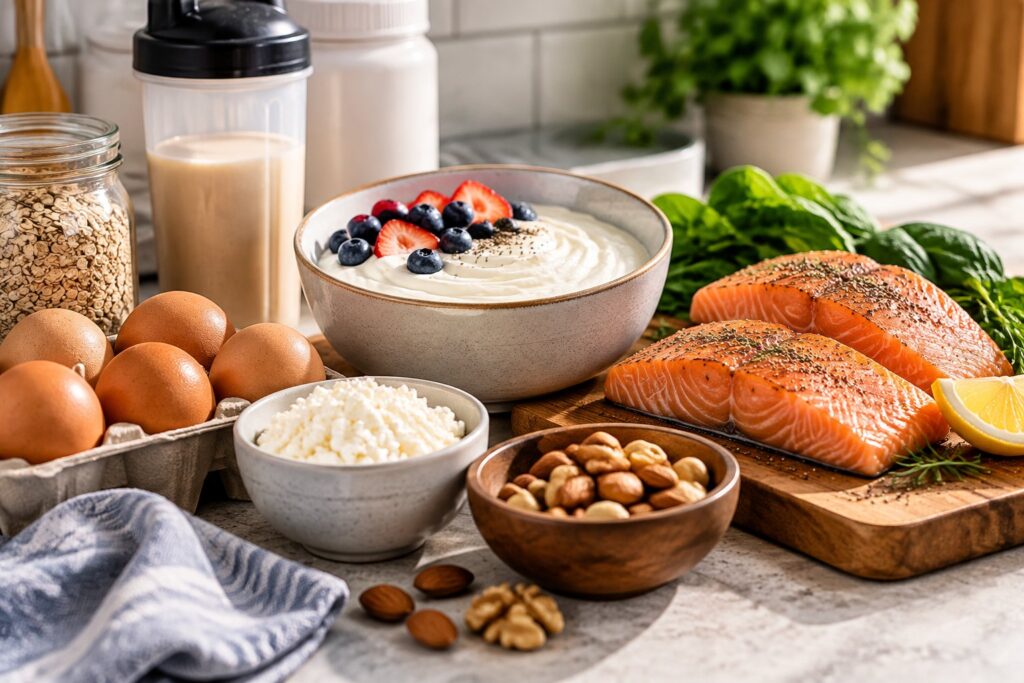
Protein intake between 1.2 and 1.6 grams per kilogram of body weight daily supplies the raw material for muscle retention during a deficit. Distribution matters alongside total. Roughly 25 to 40 grams per meal supports muscle protein synthesis better than the same total concentrated in one sitting.
Protein-dense foods earn their place when appetite is suppressed:
- Greek yogurt and cottage cheese
- Eggs and egg whites
- Chicken, turkey, and lean beef
- Fish and shellfish
- Lentils, beans, and tofu
- Whey or plant protein powder for meals that fall short
Eat protein first at every meal. Fullness arrives early on semaglutide, so whatever sits on the plate last often goes uneaten.
Resistance Training: The Second Lever
Resistance training supplies the signal that tells the body to retain muscle, which protein alone does not provide. Two to three sessions weekly is sufficient for most people.
Compound movements deliver the most return: squats, deadlifts, presses, rows, and lunges. Progressive overload matters more than session length. Adding weight or repetitions over time is what maintains the stimulus.
Cardio has value for cardiovascular health and does not replace resistance work for this purpose.
Tracking Body Composition, Not Just Weight

Body composition tracking reveals whether weight loss is coming from fat or muscle, which the scale alone never shows. Four methods work at different budgets:
DXA scans give the most accurate reading and are available at many clinics. Bioelectrical impedance scales provide directional trends at home. Waist circumference measured monthly tracks visceral fat reduction. Strength benchmarks, such as whether your working weights hold steady, function as a practical proxy for muscle retention.
Measure every four to six weeks rather than daily.
Where Supplementation Fits
No supplement replaces protein intake or resistance training for muscle retention. Those two levers do the work, and any product positioned otherwise deserves scrutiny.
Metabolic support plays a different role. RightWell GLP-1 Boost is a stimulant-free formula supporting appetite control, metabolic balance, and blood sugar stability across every stage of a GLP-1 journey, including the transition period after therapy ends when appetite returns and maintenance becomes harder.
Eriomin lemon bioflavonoid complex, Morosil red orange extract, and CaloriBurn GP grains of paradise make up the active formula. The product is non-GMO, gluten-free, and made in the USA, priced from $29 to $64 per bottle with a 60-day money-back guarantee.
Pair it with the protein and training habits above rather than in place of them. Our guide to starting semaglutide safely covers how to build both before the first dose.
View GLP-1 Boost pricing and options
Frequently Asked Questions
Does muscle loss on semaglutide reverse after stopping?
Muscle rebuilds with resistance training and adequate protein, though rebuilding takes longer than losing. Prevention during treatment is considerably easier than recovery afterward.
How do you know whether you are losing muscle or fat?
Body composition measurement, not the scale. Stalled or falling strength in the gym alongside dropping weight is the most practical everyday signal.
Is creatine useful during GLP-1 weight loss?
Creatine monohydrate has extensive research behind its role in strength and lean mass retention during a deficit. Discuss any addition with your prescriber.
Should you slow down weight loss to protect muscle?
Slower loss generally preserves more lean mass. Prescribers adjust titration pace when that trade-off makes sense for the individual.
These statements have not been evaluated by the Food and Drug Administration. This product is not intended to diagnose, treat, cure, or prevent any disease. Consult your healthcare provider before making changes to a prescription treatment plan.