


Disclosure: We earn a commission on purchases made through links in this article. Our recommendations reflect published research and product formulation, not commission rates.
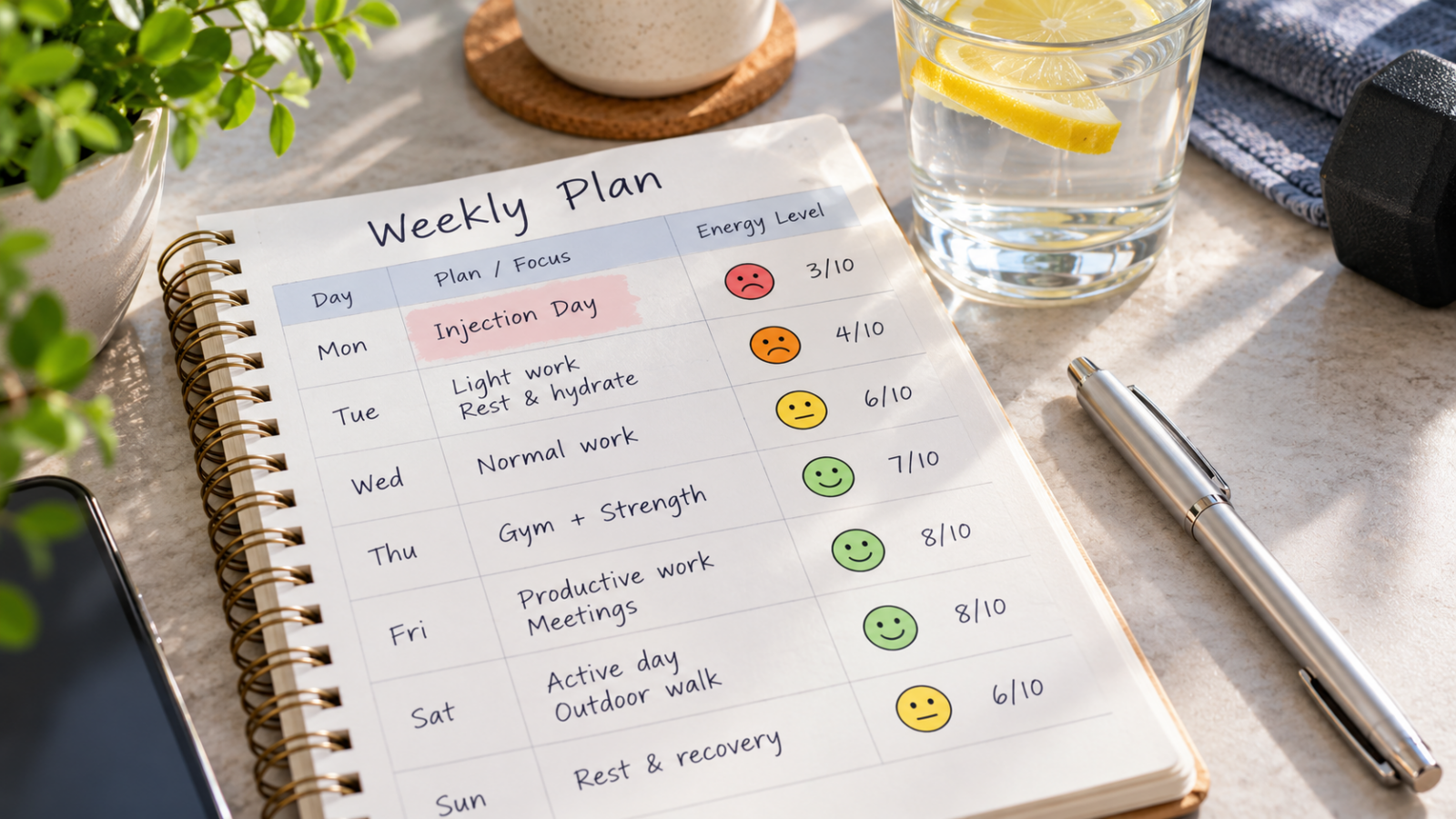
Energy on Ozempic follows a weekly rhythm, and working with that rhythm beats fighting it every day. Injection day starts a pattern that repeats across the week. Most people feel the strongest appetite suppression and the lowest energy in the days immediately after, then steadier ground toward the end of the cycle. Scheduling demanding work, training, and social commitments around that pattern changes how the week feels. The nutrition side sits in our guide to energy during GLP-1 therapy. This one covers the daily tactics.
Map Your Weekly Pattern First
Track energy for two full weeks before changing anything, because the pattern is individual. Injection day varies, dose level varies, and where the dip lands differs between people.
Record three things each day: the day relative to injection, a one-to-ten energy rating, and the time of day energy dropped. Two weeks produces a readable shape.
Most patterns show a low stretch one to three days post-injection. Knowing which days those are for you is the whole point of the exercise.
Schedule Around the Low Days
Put demanding work on the days your pattern shows as strongest, and routine work on the low days. Calendars are adjustable in ways physiology is not.
Three applications:
- Move hard training to your stronger days rather than pushing through on the low ones.
- Book meetings and calls requiring full attention outside the post-injection window.
- Reserve the low days for administrative work, errands, and tasks that tolerate reduced focus.
People often have more control over scheduling than they assume. Shifting a workout by two days costs nothing.
Handling the Afternoon Dip

Afternoon energy drops respond to movement and light rather than to more food. The dip typically lands between one and four in the afternoon.
Ten minutes outdoors does more than a snack for most people. Daylight exposure supports alertness directly, and walking raises circulation without adding volume to a stomach that empties slowly.
Standing for a portion of the afternoon, changing rooms, or taking calls while walking all interrupt the slide. Sitting through it extends it.
Morning Light and Sleep Timing

Daylight exposure within an hour of waking supports the circadian signals that govern daytime alertness. Fifteen to twenty minutes outdoors works, even on overcast days.
Consistent sleep and wake times matter more than total hours for daytime energy specifically. A stable schedule produces steadier alertness than a variable one at the same total duration.
Keep the last hour before bed dim. Screens and bright overhead light delay the transition and cost the following day.
Pacing Through the Escalation Weeks
Each dose increase brings a short return of lower energy before intake and adaptation catch up. The window usually runs one to two weeks.
Plan for it rather than being surprised by it. Reduce optional commitments in the week following an increase. Hold training frequency and drop volume rather than stopping entirely. Expect the previous baseline to return.
Anyone whose energy has not recovered several weeks after a dose increase should raise it with their prescriber. Persistent fatigue is a reason for a dosing conversation.
Social Situations and Travel
Reduced appetite complicates meals built around eating, and planning ahead removes most of the friction. Restaurant tactics sit in our GLP-1 meal planning guide.
For travel, carry a protein source rather than relying on finding one. Airport and roadside options are volume-heavy and protein-light, which is the opposite of what works now.
For social meals, eat something small beforehand so the occasion is not carrying your entire day’s nutrition.
Where Metabolic Support Fits
Daily rhythm and nutrition do the work, and supplementation sits alongside both.
RightWell GLP-1 Boost is stimulant-free, which matters for anything taken during a phase when dehydration and blood sugar swings already run higher than usual. The formula supports appetite control, metabolic balance, and steady blood sugar, combining Eriomin lemon bioflavonoid complex, Morosil red orange extract, and CaloriBurn GP grains of paradise. The product is non-GMO, gluten-free, and made in the USA, priced from $29 to $64 per bottle with a 60-day money-back guarantee.
View GLP-1 Boost pricing and options
Frequently Asked Questions
Does changing injection day help with energy?
Shifting the injection moves the low window to different days of the week. Discuss any change with your prescriber before making it.
Should you nap during the low days?
Short naps of twenty minutes or less restore alertness without affecting night sleep. Longer naps tend to cost the following night.
Does energy improve at a maintenance dose?
Most people report steadier energy once dose increases stop and intake stabilizes at the maintenance level.
How long should you track your energy pattern?
Two weeks establishes the baseline. Repeat the tracking after each dose increase, since the pattern shifts.
These statements have not been evaluated by the Food and Drug Administration. This product is not intended to diagnose, treat, cure, or prevent any disease. Contact your healthcare provider about fatigue or any symptom experienced during prescription treatment.