



Disclosure: We earn a commission on purchases made through links in this article. Our recommendations reflect published research and product formulation, not commission rates.
Ozempic face is facial volume loss caused by rapid weight reduction, not by the medication acting on facial tissue. The same change follows any fast weight loss. GLP-1 medications simply produce that loss faster and in more people than previous approaches, which is why the term attached itself to a drug name. Severity depends on how quickly weight comes off, age, and how much facial fat existed to begin with.
Why the Face Shows It First
Facial fat sits in distinct compartments that provide structural support, and those compartments are small enough that losing a portion is immediately visible. The cheeks, temples, and area around the eyes carry the most noticeable ones.
Three things happen together during substantial weight loss:
- Fat compartments shrink, removing the support that holds facial contours
- Skin does not retract proportionally, particularly past the mid-thirties as collagen and elastin decline
- Underlying structure becomes more visible, which reads as hollowing at the temples and under the eyes
Body fat loss distributes across a far larger surface. The same proportional loss on a thigh is invisible. On a cheek it is not.
What Increases Severity
Four factors determine how pronounced the change becomes.
Speed of loss matters most. Faster reduction gives skin less time to adapt to the smaller underlying volume. Age matters second, since skin elasticity declines steadily and recovery slows. Total amount lost scales the effect directly. Starting facial fat volume determines how much there was to lose.
Sun exposure history, smoking, and hydration all influence skin quality, which affects how visible the change becomes.
What Reduces It
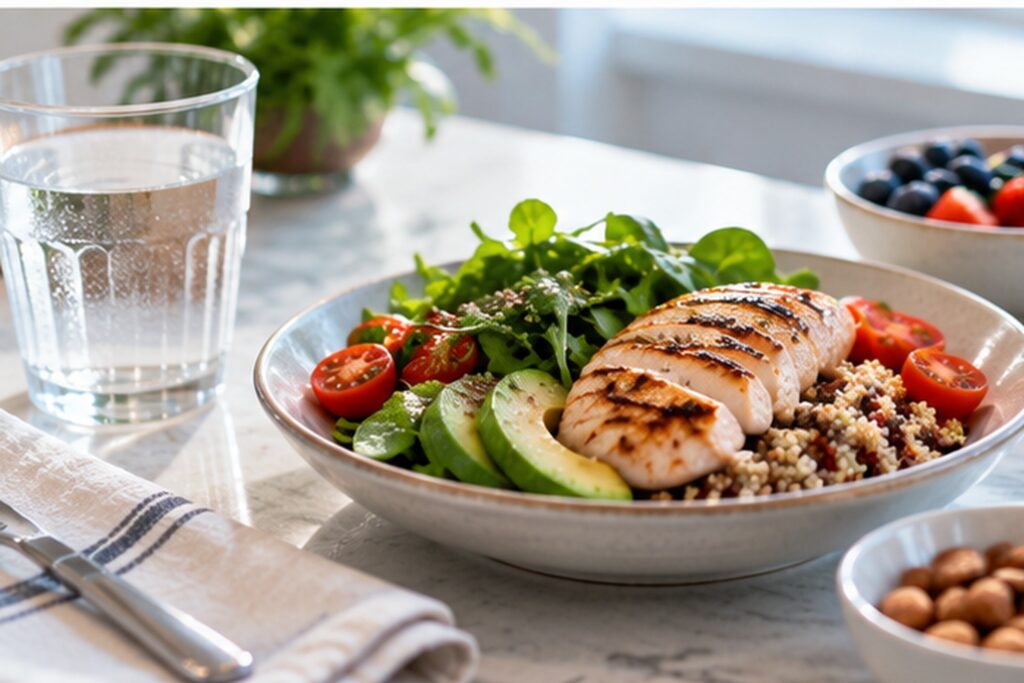
Slower weight loss and preserved lean tissue produce a less pronounced result than rapid loss does.
- Lose at a moderate pace. Prescribers adjust titration speed, and a slower approach is a legitimate reason to ask.
- Hit protein targets. Protein supports collagen production alongside muscle retention. The targets sit in our guide to semaglutide and muscle loss.
- Train with resistance. Preserving lean mass across the body changes the overall composition of what is lost.
- Stay hydrated. Dehydration accentuates hollowing and is common during GLP-1 therapy.
- Protect skin from sun. Daily sun protection supports the collagen that remains.
None of these prevent facial volume loss entirely. They change the degree.
Treatment Options
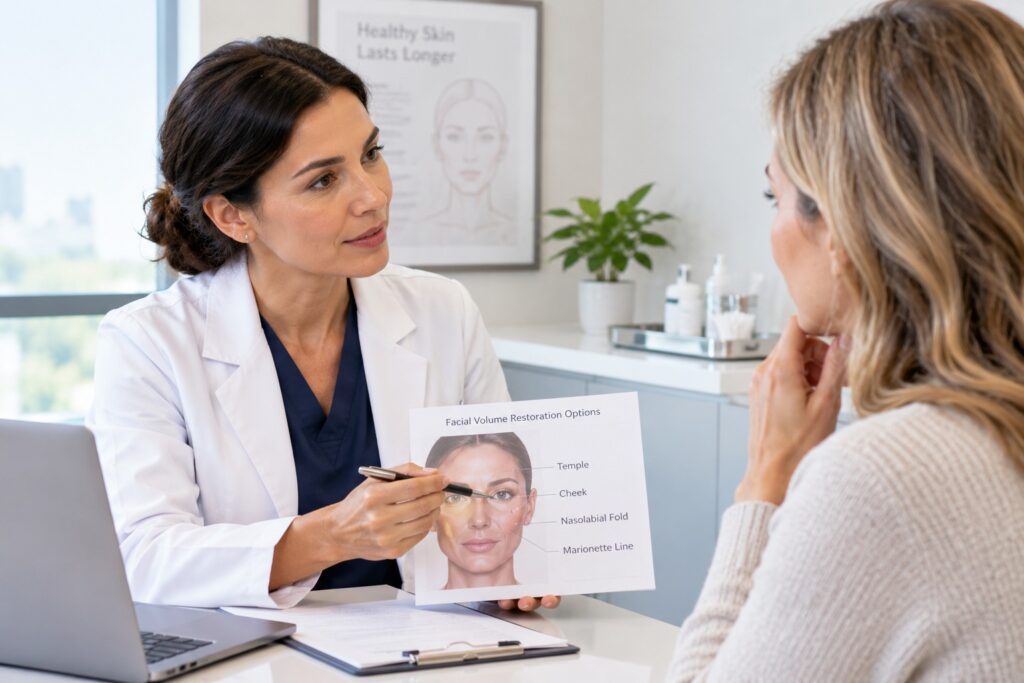
Dermatologic treatments restore facial volume, and the appropriate one depends on the degree of change and the area affected.
Dermal fillers replace volume directly in specific compartments. Collagen-stimulating injectables work more gradually by prompting the body to produce its own. Energy-based skin tightening treatments address laxity rather than volume. Surgical options exist for substantial changes.
Consult a board-certified dermatologist or plastic surgeon rather than a non-medical provider. Facial anatomy is unforgiving of inexperience, and the compartments involved sit close to structures that matter.
Wait until weight has stabilized before pursuing volume restoration. Treating a face that is still changing produces a result that will not hold.
Keeping It in Proportion
Facial volume loss is a cosmetic consequence of a metabolic improvement, and the two sit on different scales. Reduced cardiovascular risk and improved metabolic markers are the reason the treatment exists.
Nutrition quality through the loss phase supports skin alongside everything else. Smaller food volume means fewer micronutrients unless meals are built deliberately, which our guide to GLP-1 meal planning covers.
RightWell GLP-1 Boost is a stimulant-free supplement supporting appetite control, metabolic balance, and blood sugar stability through weight loss and the maintenance phase that follows. The formula combines Eriomin lemon bioflavonoid complex, Morosil red orange extract, and CaloriBurn GP grains of paradise. The product is non-GMO, gluten-free, and made in the USA, priced from $29 to $64 per bottle with a 60-day money-back guarantee.
View GLP-1 Boost pricing and options
Frequently Asked Questions
Does Ozempic face reverse on its own?
Facial volume returns partially if weight is regained, which is not a desirable trade. Volume loss at a stable lower weight generally persists.
Does it happen to everyone on GLP-1 medication?
No. Younger people, those losing less weight, and those losing it gradually often see little change.
Is Ozempic face permanent?
Volume loss persists at a stable weight. Dermatologic treatment restores it where the change is significant enough to warrant intervention.
Does switching medication prevent it?
No. Any approach producing comparable weight loss produces comparable facial change. Pace of loss is the variable, not the medication.
These statements have not been evaluated by the Food and Drug Administration. This product is not intended to diagnose, treat, cure, or prevent any disease. Consult a board-certified dermatologist or your prescriber about facial changes during weight loss.